
U.S. Trailer Net Orders Drop to 7,794 Units in July
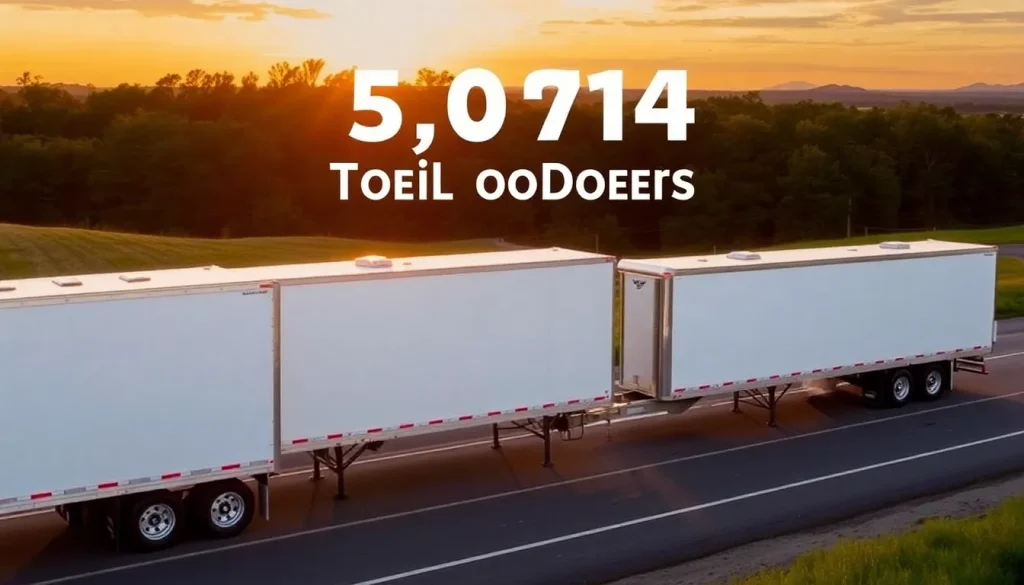
The dynamics of the U.S. trailer market are experiencing significant shifts that demand attention from industry stakeholders. As reported by FTR, recent data reveals a notable decline in trailer net orders, signaling potential challenges ahead for manufacturers and fleet operators alike. Understanding these trends is essential for navigating the complexities of the current economic landscape.
In this article, we will explore the latest figures regarding trailer orders, cancellations, and backlogs, as well as the impact of tariffs and market pressures on the industry. Additionally, we will look ahead to the future of the trailer market and assess the implications for manufacturers and fleets.
Understanding trailer net orders and market volatility
According to FTR, U.S. trailer net orders experienced a significant drop of 39% month-over-month in July, totaling 7,794 units. This decline comes after a brief rebound in June that was largely driven by dry van orders. Despite a year-over-year increase of 23%, thanks to relatively weak comparisons from 2024, the current figures remain considerably below the 10-year average for July, which stands at 14,856 units.
As of year-to-date 2025, trailer orders have accumulated to 102,991 units, marking a 31% increase compared to the previous year, with an average of 14,713 orders per month. This data underscores the ongoing volatility in the market, which has been exacerbated by fluctuating freight demand and rising material costs.
Cancellations, backlogs, and production challenges
In July, order cancellations accounted for 17% of gross orders, a significant decrease from the 39% observed in May. The cumulative net orders for the 2025 season, which spans from September 2024 to July 2025, total 181,430 units, reflecting a 5% decline year-over-year and an average of 16,494 units per month.
Production figures also paint a concerning picture. The total U.S. trailer build fell by 1% month-over-month and 4% year-over-year, reaching 17,999 units in July. Year-to-date production for 2025 has decreased by 23% compared to last year, totaling 116,826 units and averaging 16,689 units per month. With net orders trailing behind production, backlogs have declined by 11,364 units in July, resulting in an 11% decrease month-over-month and a 10% decline year-over-year. This has brought the backlog down to 92,132 units, leading to a backlog-to-build ratio of 5.1 months. If order activity does not improve with the upcoming opening of 2026 order boards in September, manufacturers could face further production challenges.
Impact of tariffs on the trailer sector
Dan Moyer, a senior analyst for commercial vehicles at FTR, highlights the increasing pressure on the trailer market due to expanded tariff exposure. Effective from August 7, higher tariff rates were imposed on most major U.S. trading partners. Furthermore, starting August 18, a 50% tariff on steel and aluminum is expected to impact both imported components and the materials used in fully assembled imported trailers.
This escalation in tariffs poses several challenges for both original equipment manufacturers (OEMs) and suppliers:
- Increased costs of raw materials, which may lead to higher prices for end consumers.
- Potential margin losses that OEMs and suppliers may need to absorb.
- A shift towards consolidation in the industry, favoring larger, vertically integrated companies.
- Extended replacement cycles for fleets, with many relying on used trailers rather than investing in new builds.
- Delays in fleet expansions as companies exercise caution in capital spending.
The trailer market is currently witnessing a shift toward heightened price sensitivity and cautious capital investments. As supply chains consider domestic reorientation, they face structurally higher cost levels, which could further complicate planning. Moyer points out that policy uncertainty is exacerbating market volatility, making it increasingly difficult for companies to engage in long-term strategic planning.
As we look ahead, it is crucial for stakeholders to remain adaptable. Potential strategies include:
- Assessing the supply chain for opportunities to mitigate costs.
- Investing in technology and processes that enhance operational efficiency.
- Exploring alternative financing options to manage capital expenditures.
For manufacturers and fleets, understanding these trends will be vital in navigating the complexities of the market and ensuring sustainable growth in the face of ongoing challenges. Adapting to the changing landscape will require proactive measures and a keen awareness of the economic forces at play.
 Primafrio transports stadium grass like San Mamés logistics
 THRC reorganizes important personnel positions
 Trucking news: Kodiak Robotics appoints new CFO and Fontaine Trailer hires senior sales director
 ATA trends report shows decline in industry performance
If you want to know other articles similar to U.S. Trailer Net Orders Drop to 7,794 Units in July you can visit the category BLOG.
Leave a Reply
RELATED POSTS