
MicroVision plans lidar rollout for trucks by 2029
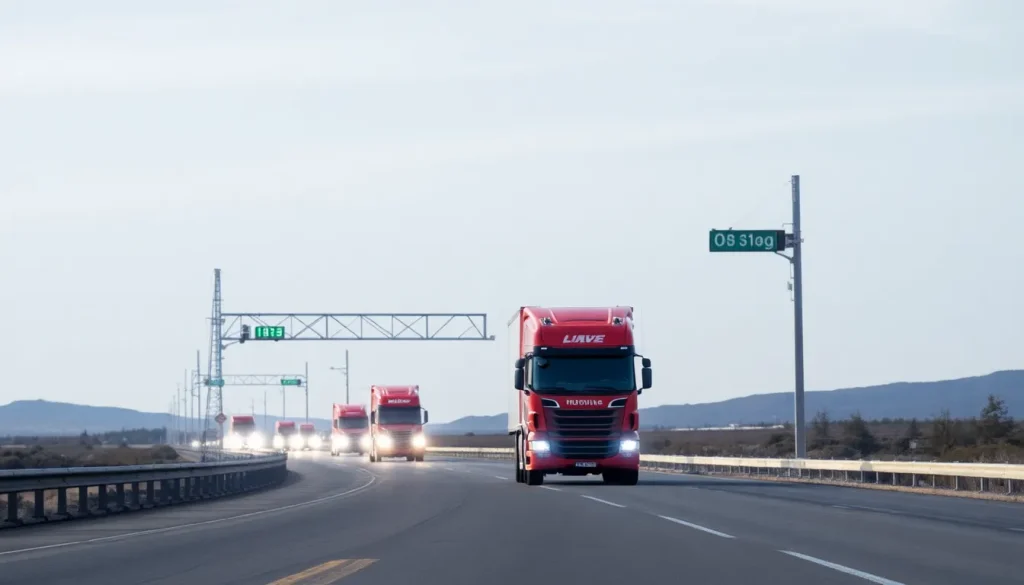
As the automotive industry races toward a future defined by automation and enhanced safety, MicroVision is positioning itself at the forefront of this revolution with its innovative lidar technology. The company's focus on integrating lidar into trucks by 2029 promises to reshape how these vehicles operate, enhancing safety and efficiency in freight operations.
With the aim to roll out its Movia S short-range lidar sensor and tri-lidar architecture, MicroVision is set to begin production for passenger vehicles in 2028, followed closely by trucks. This timeline is significant as it reflects a growing acknowledgment of the potential of lidar technology in various automotive applications.
Understanding Tri-lidar Architecture
MicroVision's tri-lidar architecture represents a paradigm shift in the way lidar systems are designed for vehicles. Instead of relying on a single sensor for all tasks, this architecture divides perception responsibilities between multiple specialized sensors—one focusing on short-range detection and another on long-range tasks.
This modularity not only enhances the performance of each sensor but also allows for a more efficient distribution of power and space within the vehicle. By mimicking the evolution of radar technology, which transitioned from multifunctional units to specialized sensors, MicroVision ensures that each lidar component can be optimized for its specific role, leading to:
- Reduced size and weight of each lidar unit.
- Lower power consumption, making them suitable for longer operational periods.
- Improved integration into vehicle design, which is crucial for maintaining aerodynamics and overall aesthetics.
Movia S Short-range Sensor: Key Features and Benefits
At the heart of MicroVision's system is the Movia S short-range sensor. This advanced lidar unit is designed to provide a 90°×60° field of view for automotive applications, with versions tailored for industrial and defense uses expanding this to a remarkable 180°×130°.
The detection capabilities of the Movia S are impressive, with ranges of 30–50 meters at a 90% confidence level on a target with 10% reflectivity. This level of precision is vital for applications such as:
- Detecting pedestrians and cyclists in urban environments.
- Enhancing safety in tight maneuvers, such as parking and turning.
- Preventing collisions with roadside obstacles.
Compact and versatile, the Movia S sensor measures only about eight cubic inches, making it ideal for installation behind windshields, in grilles, or within body panels of heavy trucks. This versatility opens up new avenues for side- and corner-mounted lidar coverage without negatively impacting vehicle aerodynamics.
Long-range Lidar Technology: The Mavin System
Complementing the Movia S is the long-range lidar system known as Mavin. This component is designed to extend detection capabilities beyond 220 meters, with potential ranges of 250 to 300 meters specifically for trucking applications. This extended reach is crucial for:
- Highway driving, allowing vehicles to anticipate and react to distant obstacles.
- Improving automation features, such as adaptive cruise control and lane-keeping assistance.
One of the standout features of the Mavin system is its low power consumption of approximately 10 watts, which supports passive cooling methods. This efficient energy use not only enhances reliability but also enables the sensor to be discreetly mounted behind mirrors or aerodynamic panels without compromising performance.
The Importance of Cost and Adoption
MicroVision's commitment to affordability is a key driver of its technology's potential adoption. Both the Movia S and Mavin systems utilize a sequential flash technology, ensuring a solid-state design free of moving parts. This innovation boosts reliability while significantly reducing power usage and overall system costs.
The company is targeting a price point of around US$200 for the short-range "corner" unit and US$300 for the long-range unit by 2028. This pricing strategy is approximately 40–50% lower than traditional lidar systems that offer similar point-cloud performance. Such cost efficiencies are essential for:
- Encouraging fleet operators to invest in new safety technologies.
- Facilitating widespread adoption across various sectors, including automotive, industrial, and defense.
By leveraging the same architecture across these diverse markets, MicroVision aims to achieve significant economies of scale, which will further drive down costs and enhance accessibility.
Implications for the Trucking Industry
The introduction of lidar technology into the trucking sector carries profound implications for safety and efficiency. The near-field coverage provided by the Movia S can enhance the detection of vulnerable road users, such as pedestrians and cyclists, particularly during tight urban turns. This capability can:
- Reduce blind spots around trailers, improving visibility for truck drivers.
- Increase safety during yard operations, where maneuverability is often compromised.
Furthermore, the long-range capabilities of the Mavin unit will significantly benefit highway automation, with perception extending up to 300 meters. This range allows trucks to react more quickly to potential hazards, making roads safer for all users.
Glen De Vos, MicroVision's chief technology officer, underscores that successful adoption in trucking will hinge not only on performance metrics but also on the lifecycle cost of these systems. Smaller, low-power sensors that can be integrated seamlessly into vehicle designs may lead to:
- Reduced installation complexity.
- Minimized downtime during installation and maintenance.
- Lower repair costs compared to traditional roof-mounted lidar systems.
As the trucking industry continues to evolve, the integration of advanced lidar technology is poised to play a pivotal role in enhancing safety, efficiency, and automation. By tapping into MicroVision's innovative solutions, the future of freight operations looks promising and filled with potential.
To gain a deeper understanding of how such technologies can transform the industry, check out this informative video:
 Coke Canada Bottling invests $1.2 million in electric fleet expansion
 Nova Scotia's plan to end 80/20 deal faces trucker backlash
 ZM Trucks launches electric trucks in North America and opens factory
 Sikh truckers affected by fatal Florida crash
If you want to know other articles similar to MicroVision plans lidar rollout for trucks by 2029 you can visit the category DTC TRUCKS.
Leave a Reply
RELATED POSTS